
Arpi on Tile
Tile: The Pinnacle of Sustainable & Fluid Design
Featuring a 15x15cm square lattice format, Cevica’s Celosia Symbol collection offers the ability to filter direct sunlight, while allowing air flow. Available in five shapes representing letters (T, D, V, X), as well as a blank square). (Image courtesy Cevica.)
By Arpi Nalbandian Tileometry
Tile has evolved far beyond its practical origins to become a design superstar, celebrated for its sustainability, ability to support fluid design, and unmatched knack for transforming dull spaces into dramatic statements. From large-format porcelain panels that make walls vanish to intricate mosaics that add character, tile is everything interior and exterior design needs – and more.
Sustainability at the Core
Across the tile world, carbon-conscious choices are leading the charge. Materials like ceramic and porcelain boast lower life‑cycle carbon footprints than other flooring options, largely because they’re produced from naturally occurring, recyclable materials with minimal VOCs. Many manufacturers now offer Environmental Product Declarations (EPDs) and Green Squared-certified lines, giving homeowners verifiable eco-credentials.When creative minds unite, the results are nothing short of extraordinary. Collaborative tile collections bring together the vision of renowned designers, architects, and brands to craft surfaces that blur the lines between art and architecture. As such, several tile manufacturing companies are producing jaw-dropping examples of what sustainability can produce, including: Livden, Florida Tile, Crossville, Daltile, Fireclay Tile, and Mile®stone Tile. Let’s take a look at what drives their efforts:
- Reduction in environmental footprint
- Support a circular economy by minimizing waste and reducing the need for new resources.
- Reduce embodied carbon, which includes all the emissions generated before a tile is even installed—from extracting raw materials to manufacturing and delivery.
- Qualify for green building certifications, such as: Leadership in Energy and Environmental Design (LEED), WELL Building Standard, Green Squared®, and GREENGUARD Gold.
- Promote healthier indoor environments (moisture resistance, hypoallergenic, low or no VOC, etc.)
- Elevate design by creating beautiful and meaningful surface materials that focus on sustainability, ethics, and often times, storytelling.
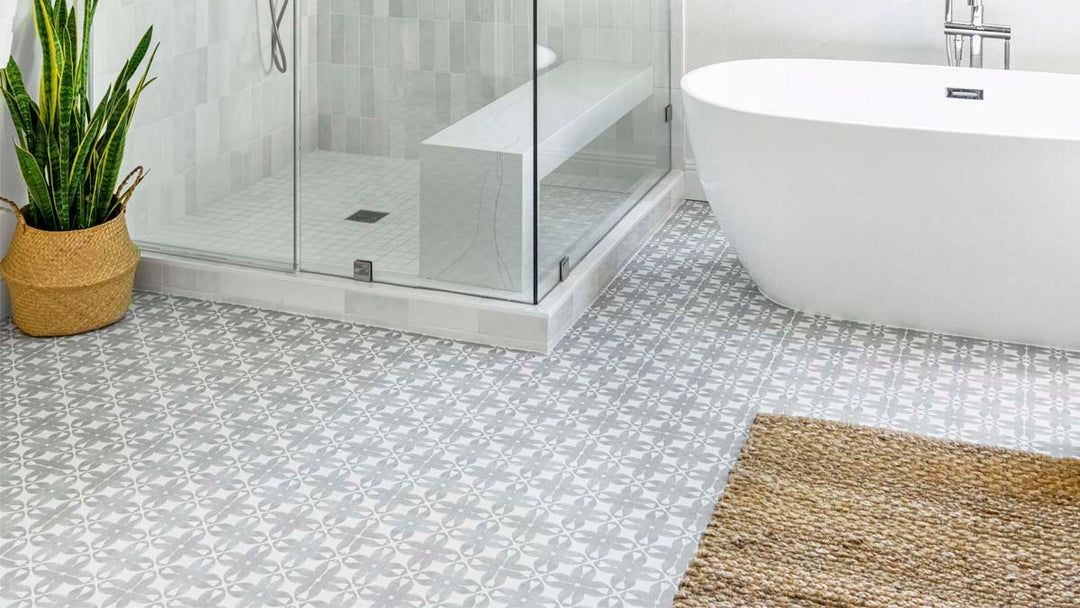
The 5 Flower Series, from Livden’s Stella Collection, shown here featuring 12"x12" Polar Ice Terrazzo. (Image courtesy Livden)
Design: Tile Drenching
Pushing past traditional boundaries to unlock new design potential is what it takes to reimagine the norm. No longer confined to walls, today’s large-format tile slabs are making bold appearances such as countertops, statement furniture pieces, and seamless architectural elements. With their sleek scale, durability, and expansive aesthetic impact, these slabs are transforming interiors into immersive, multifunctional design experiences. Here are several standouts that define the imposing slabs.
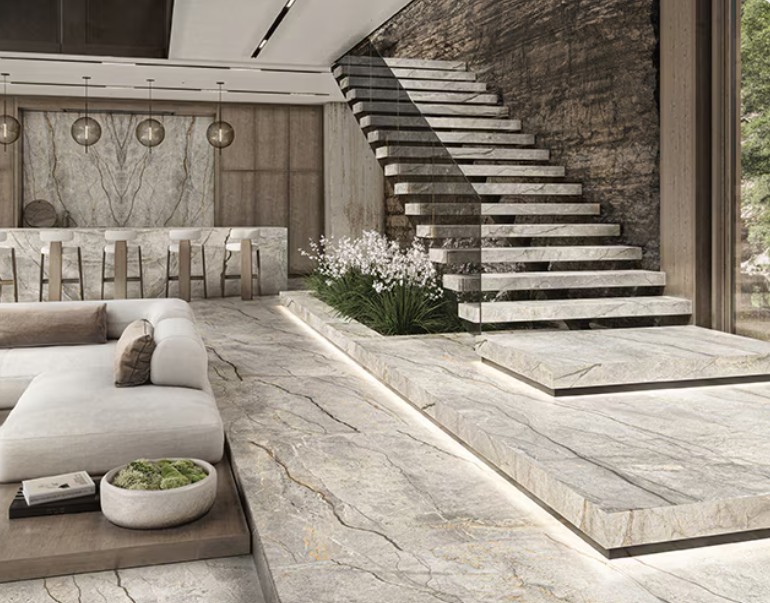
Daltile’s Collection of Panoramic Porcelain Surfaces™ is available in seven sizes (including 62" x 124" and 31" x 124"), and in a 6- or 12mm thickness. Optimal for both residential and commercial spaces.
Texture, Pattern & Personal Expression
Gone are one-note tiles that offer soulless, basic, or uninspired styles with little to no visual interest. Thankfully, tile design has evolved into bold patterns, textures, colors, and finishes—bringing personality and dimension to spaces. With a surge in expressive and dynamic styles, tile has carved a path to the forefront of design rather than settling for a barely visible, low-key supporting role. Choosing variety over simplicity, it’s evident designers, architects and project specifiers have opted for layered visuals that combine mixed materials in tandem with artisanal qualities that add richness and character.
In essence, this development clearly signals a shift from “safe and simple” to creative, curated, and visually engaging tile choices such as: textured tactile surfaces, soft organic tones, florals, metallics, and stone motifs.
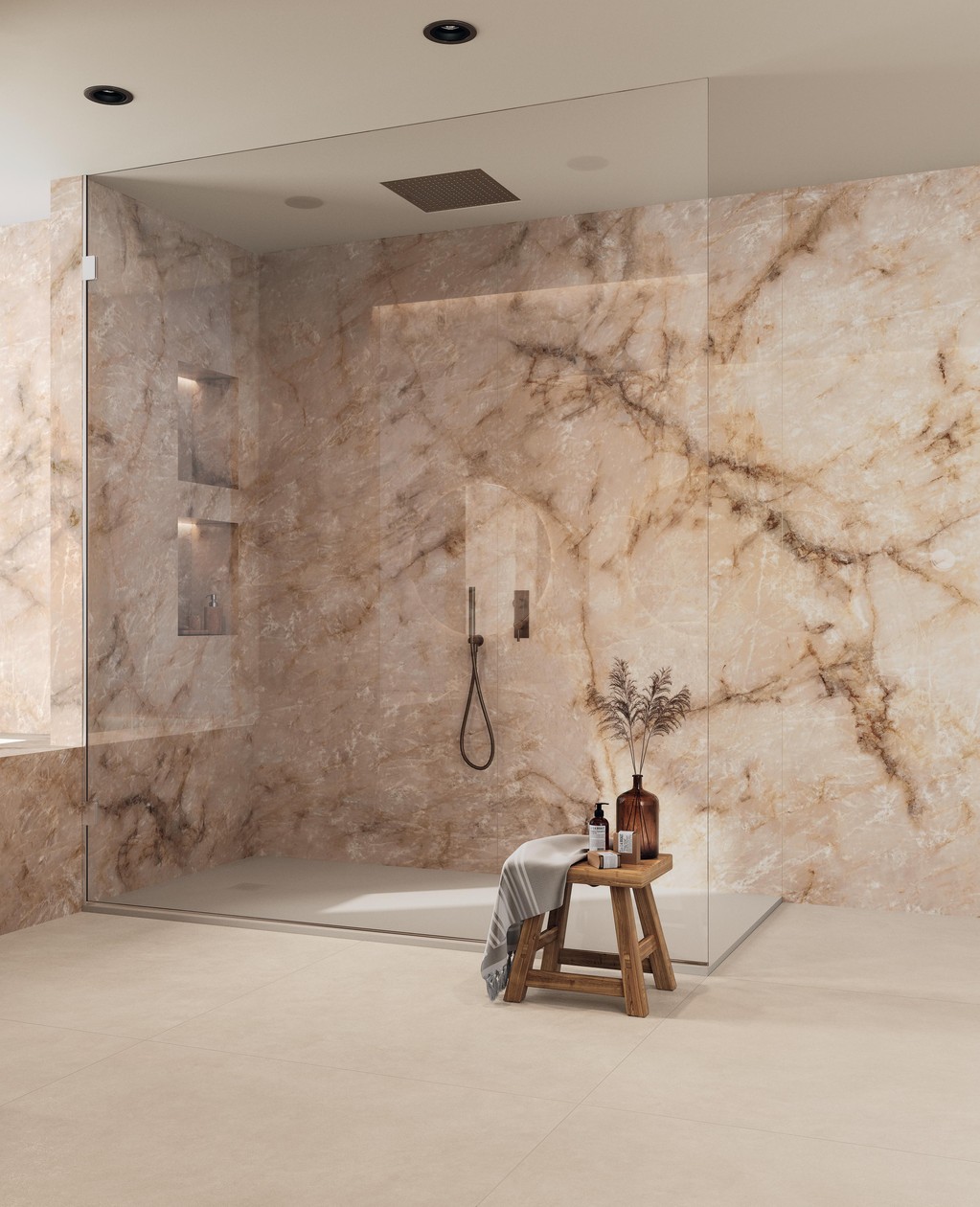
Atlas Concorde’s Marvel Diva in Amethyst (measuring 120x278cm) enriches the wall while Boost Natural in Kaolin (120x120cm) styles the floor. (Image courtesy Atlas Concorde)
High-Tech Tile Innovations
Increasingly, technology is playing an expanded role in tile’s ascent. Cutting-edge options showcase pressure-sensitive LED lighting, induction surfaces in floor slabs and countertops, and smart tiles that integrate with home automation—all while preserving non-conductivity and elegance.
Outdoor design has always been a part of the tile revolution: weatherproof porcelain, frost-resistant slabs, and anti-slip formats are popular for façades, walkways, patios, and pool surrounds. These exterior tiles support sustainability by lasting for decades, resisting degradation, and minimizing the need for replacements.
Also contributing to the aesthetics and sustainability are photovoltaic tiles. These tiles contain solar cells embedded directly into the surface, allowing them to convert sunlight into electricity while still serving as a weatherproof, architectural surface. Unlike bulky solar panels, photovoltaic tiles are designed to blend seamlessly with the building’s exterior, maintaining a clean, modern look.
According to market.us, Europe is currently the most advanced region in integrating this technology with the United States, China and Japan following. Emerging markets include the United Arab Emirates (UAE), Australia and India.
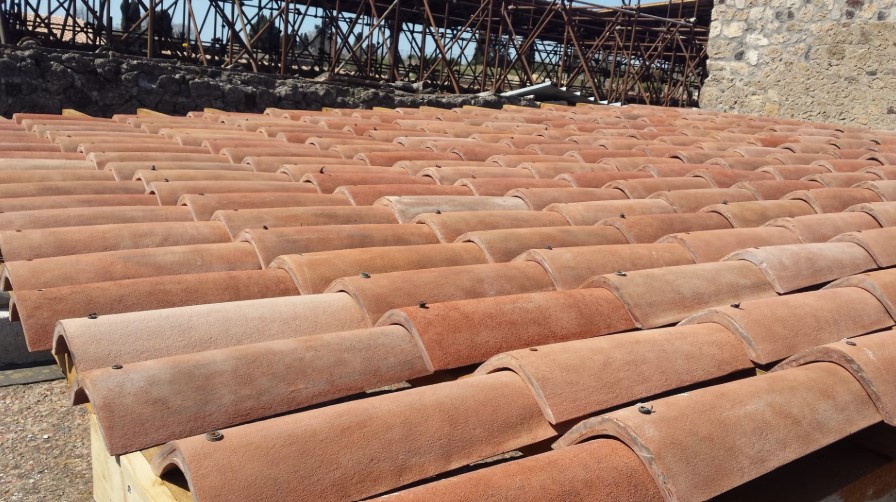
The Invisible Solar Rooftiles installed in 2018 at Domus dei Vettii, inside the Archaeological Park of Pompeii. These panels, manufactured by Italian company Dyaqua, can be made to look like stone, wood, concrete, or brick. (Image courtesy Dyaqua)
From Lackluster to Wow: Transformative Projects
Tile has the remarkable ability to turn the ordinary into the extraordinary. Whether it’s a dated kitchen backsplash, a dull entryway, or an uninspired commercial façade, tile can breathe new life into any space through color, texture, pattern, and scale. These transformative projects showcase how strategic tile choices—paired with thoughtful design—elevate interiors and exteriors from lackluster to truly showstopping.
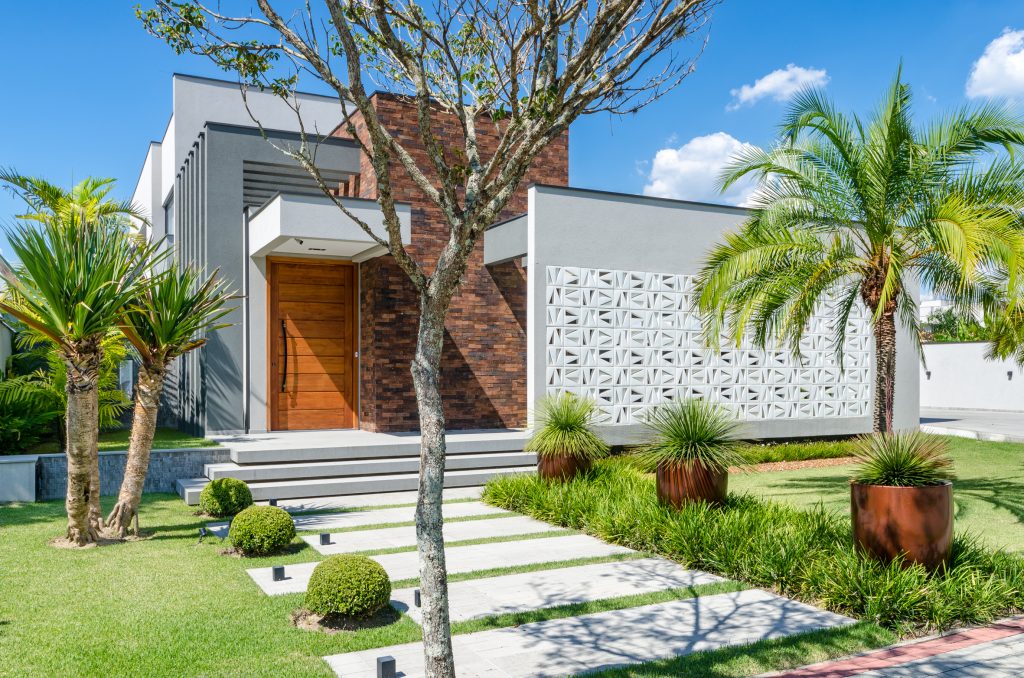
Nina Martinelli’s Brise Clair & Sombre models, shown here in Bianco, were specified by Brazilian architectural firm Arquitetas Associadas “to bring lightness and movement to the facade of a beautiful residence.” (Image courtesy Nina Martinelli)
What’s Trending?
Aside from its inherit characteristics of long-lasting durability, hygienic properties, low-maintenance characteristics and high sustainability values, tile continues to push pre-determined architectural and design boundaries. So, which formats are continuing their upward trend for 2025?
- Large-format porcelain tiles/slabs: Oversized tiles continue to dominate, especially in porcelain. They’re being used not just for floors and walls, but also for countertops, furniture, and even shower surrounds, offering minimal grout lines and a sleek, continuous look.
- Mixed shapes and modularity: Designers are combining hexagons, trapezoids, and parallelograms in creative layouts. This modular play allows dynamic visual interest, especially in feature walls and backsplashes.
- Fluted and 3D tiles: Texture is trending. Fluted tiles (ribbed or reeded profiles) bring depth to minimalist spaces, while 3D geometric tiles add sculptural elegance.
- Brick and elongated subway formats: A modern spin on classic styles—think slender, stacked layouts, or vertically arranged bricks for a fresh feel.
- Mosaic and micro-tile revival: Mosaic tiles—especially with metallic, iridescent, or handmade finishes -- are making a statement in showers, pools, and accent niches.
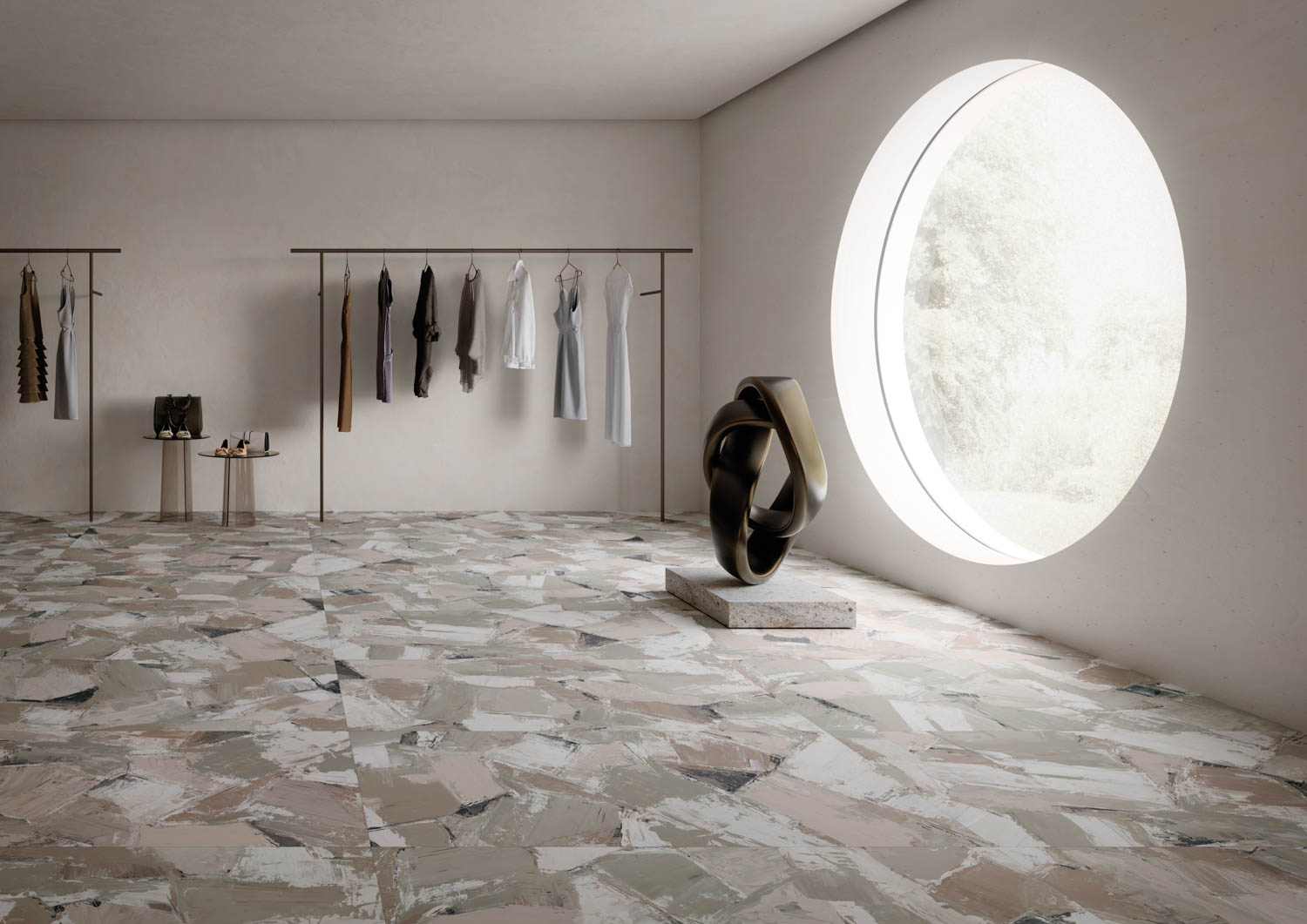
Apavisa’s Oleo collection, available in several sizes and three colorways, takes its inspiration from the chromatic richness produced by the techniques used in oil paintings. (Image courtesy Apavisa)
Colors to Consider
What about the choice of color palettes being specified/selected by professionals and homeowners alike? Here’s an observation:
- Earthy tones: Clay, mocha, terracotta, ochre, and warm beige are leading the way, with wellness-driven aesthetics.
- Jewel tones and dusky hues: Emerald, deep blue, burgundy, and dusty rose add luxury and richness to otherwise understated spaces.
- Soft greens and botanical hues: Sage, olive, and fern green echo biophilic design trends, and work well with natural stone or wood-look tiles.
- Peach, coral, and muted pinks: Warm pastels are being used in powder rooms, kitchens, and even outdoor patios for a modern yet nostalgic charm.
- High-gloss and metallic finishes: Glossy glazes in bronze, silver, and mother-of-pearl lend a reflective, luxe touch—especially in statement areas.
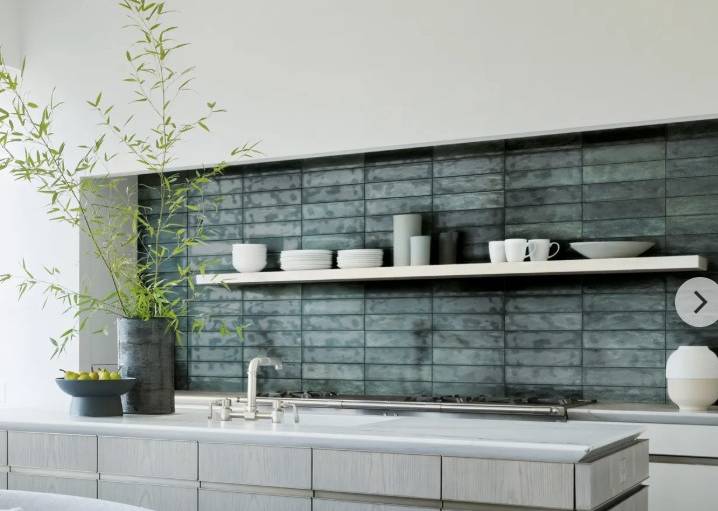
4Earth from Mile®stone Tile is a collection inspired by the natural wonders that surround us: from icy glaciers to the lush expanse of the forest. Offered in a single 3"x12" size and a glossy finish. (Image courtesy Mile®stone Tile)
Thus far, this year’s tiling evolution represents an ideal intersection of design innovation, environmental responsibility, and transformative aesthetics. With advancements in sustainability, fluid design techniques, and smart integration with technology, tile continues its ascent as the material that can literally and metaphorically pave the way from ordinary to extraordinary.